how to plant tulip bulbs for vibrant spring blooms
Table of Contents
- Understanding Tulip Bulbs: Types, Varieties, and Selection
- Categorization of Tulip Varieties by Bloom Season
- Hybrid Tulips vs. Species Tulips: Characteristics and Cultivation
- Step-by-Step Guide to Selecting Healthy Tulip Bulbs
- Optimal Planting Conditions for Tulip Bulbs: Soil, Location, and Timing
- Ideal Soil Composition for Tulip Bulbs
- Sunlight Requirements for Tulips
- Risks of Planting Tulips in Heavy Clay or Waterlogged Soil
- Step-by-Step Planting Techniques for Tulip Bulbs
- Correct Depth for Planting Tulip Bulbs
- Step-by-Step Guide to Planting Tulip Bulbs in Ground
- Planting Tulips in Containers
Every spring, tulips burst forth in a dazzling display of color, transforming gardens into canvases of nature’s artistry. Yet, behind their effortless beauty lies a meticulous process—planting tulip bulbs requires precision, from selecting the right variety to mastering soil and timing. Whether you’re a novice gardener or a seasoned enthusiast, understanding these fundamentals ensures bulbs thrive and multiply, delivering show-stopping blooms year after year.
Tulips are more than just flowers; they are resilient survivors that demand respect for their unique needs. Poor soil, incorrect planting depth, or neglecting their dormancy period can stunt growth or invite pests. This guide dissects the science and art of planting tulip bulbs, offering actionable insights to maximize their potential. From choosing cold-hardy Darwin hybrids for harsh winters to coaxing heat-tolerant species in Mediterranean climates, each decision shapes the success of your garden. With the right techniques, tulips reward patience with vibrant petals that brighten landscapes from early spring to late summer.
Understanding Tulip Bulbs: Types, Varieties, and Selection

Tulips, with their vibrant hues and elegant forms, are among the most beloved spring flowers globally. However, not all tulips are created equal—varieties differ significantly in bloom time, height, color, and hardiness. Selecting the right bulbs ensures a stunning display tailored to your climate, garden style, and maintenance preferences. This section explores the diverse world of tulip bulbs, categorizing them by bloom season, hybrid types, and species distinctions, while providing practical guidance on bulb selection, grading, and storage. Understanding these factors empowers gardeners to make informed decisions, maximizing bloom success and longevity.
Categorization of Tulip Varieties by Bloom Season
Tulip varieties are often grouped by bloom season—early, mid, and late—to help gardeners plan layered displays that extend the flowering period from early spring to late spring. Early bloomers emerge first, often in late winter or early spring, followed by mid-season varieties that peak in March and April, and late bloomers that grace gardens in April and early May. This stratification creates a cascading effect, ensuring continuous color and visual interest.
Below is a comparison table of popular tulip varieties categorized by bloom season, including their height range and color palette. The table serves as a quick reference for gardeners planning seasonal sequences or designing themed gardens.
| Variety Name | Bloom Season | Height Range (inches) | Color Palette |
|---|---|---|---|
| Early Bloomers | Late Winter/Early Spring (Feb–Mar) | — | — |
| Tulipa 'White Dream' | Early | 16–20 | Pure white with yellow base |
| Tulipa 'Couleur Cardinal' | Early | 18–22 | Deep crimson |
| Tulipa 'Winter Dream' | Early | 14–18 | Soft pink with white edge |
| Mid-Season Bloomers | March–April | — | — |
| Tulipa 'Apeldoorn' | Mid | 20–24 | Red with white edge |
| Tulipa 'Queen of Night' | Mid | 22–26 | Deep purple-black |
| Tulipa 'Fosteriana Group (e.g., 'Red Emperor')' | Mid | 18–24 | Orange-red to scarlet |
| Late Bloomers | April–Early May | — | — |
| Tulipa 'Black Parrot' | Late | 24–30 | Black-purple with ruffled edges |
| Tulipa 'Angelique' | Late | 18–22 | Pink with white base |
| Tulipa 'Menthol' | Late | 20–24 | Lavender-pink with dark edges |
Early bloomers like Tulipa 'Couleur Cardinal' thrive in colder climates and often withstand brief winter thaws, making them ideal for regions with harsh winters. Mid-season varieties such as Tulipa 'Apeldoorn' are versatile, suitable for both garden beds and cut flower arrangements, while late bloomers like Tulipa 'Black Parrot' add drama and height to garden designs. Layering these varieties ensures a prolonged display, with each group peaking at different times.
Hybrid Tulips vs. Species Tulips: Characteristics and Cultivation
Tulips are broadly divided into hybrid tulips, developed through selective breeding for specific traits, and species tulips, which are wild or naturally occurring varieties with unique genetic characteristics. Hybrid tulips are favored for their vibrant colors, large blooms, and extended vase life, while species tulips are prized for their hardiness, natural beauty, and adaptability to specific climates.
Hybrid Tulips Hybrid tulips are categorized into groups based on their growth habits, bloom characteristics, and parentage. Key hybrid groups include: - Darwin Hybrid Tulips: Known for their robust stems (24–30 inches), large blooms (3–5 inches), and excellent disease resistance. Varieties like Tulipa 'Red Riding Hood' and Tulipa 'West Point' are popular for their longevity and ability to naturalize over time. - Parrot Tulips: Recognizable by their ruffled, exotic petals and vibrant colors. Examples include Tulipa 'Black Parrot' and Tulipa 'Peach Parfait', which thrive in full sun and well-drained soil. - Fringed Tulips: Feature petals with serrated edges, adding texture to garden designs. Tulipa 'Angelique' and Tulipa 'Ballade' are notable for their delicate, lacy appearance. - Double Late Tulips: Produce fully double blooms with multiple layers of petals, such as Tulipa 'Queen of Sheba' (apricot) and Tulipa 'Pink Impression' (pink).
Hybrid tulips typically require USDA Hardiness Zones 3–8, with most varieties performing best in zones 4–7. They prefer well-drained soil and full sun, though some tolerate partial shade. Many hybrid tulips are not reliable for naturalizing unless planted in ideal conditions, as they often require division every 3–5 years to prevent overcrowding.
Species Tulips Species tulips originate from wild populations across Central Asia, Turkey, and the Caucasus Mountains. They are valued for their hardiness, early blooming, and unique forms, often thriving in challenging conditions where hybrid tulips struggle. Key species include: - Tulipa tarda (Tardy Tulip): A low-growing species (6–12 inches) with early blooms (March–April) in shades of yellow, pink, or white. Ideal for Zone 3–8, it naturalizes easily and tolerates poor soil. - Tulipa clusiana (Lady Tulip): Features small, cup-shaped flowers (1–2 inches) in white, pink, or yellow, often with contrasting bases. Thrives in Zone 4–9 and is excellent for rock gardens or container planting. - Tulipa greigii (Greig’s Tulip): Known for its marbled or striped petals, this species blooms in early spring (March) and prefers Zone 4–8. Varieties like Tulipa greigii 'Red Emperor' add striking contrast to borders.
Species tulips are generally more cold-hardy and drought-tolerant than hybrids, making them suitable for regions with extreme temperatures or limited water access. They often naturalize more reliably and are less prone to viral diseases like tulip breaking virus, which affects many hybrid varieties.
Step-by-Step Guide to Selecting Healthy Tulip Bulbs
Choosing high-quality tulip bulbs is critical for ensuring vigorous growth, robust blooms, and long-term bulb health. Healthy bulbs are firm, plump, and free of damage or disease. Below is a detailed guide to evaluating tulip bulbs at the point of purchase, along with a visual checklist for quick reference.
Key Factors in Bulb Selection 1. Size and Weight: Larger bulbs (measured by circumference) produce bigger, more abundant flowers. Bulbs should feel heavy for their size, indicating adequate
Optimal Planting Conditions for Tulip Bulbs: Soil, Location, and Timing
Tulips thrive under specific environmental conditions that directly influence their growth, flowering, and long-term health. Optimal planting conditions encompass a balance of soil composition, sunlight exposure, seasonal timing, and site preparation tailored to regional climates. Neglecting these factors can lead to stunted growth, poor blooming, or even bulb rot. Understanding these variables ensures a robust foundation for tulip cultivation, whether in traditional gardens, urban spaces, or containers. This section explores the technical requirements for soil, sunlight, drainage, and seasonal planting strategies, along with practical adjustments for diverse climates and garden setups.
Ideal Soil Composition for Tulip Bulbs
Tulips require well-draining, fertile soil with a slightly acidic to neutral pH range to prevent bulb diseases and encourage vigorous growth. The ideal soil composition supports root development while minimizing waterlogging, which can cause rot. Amendments such as compost, sand, or organic matter are often necessary to improve heavy or compacted soils. Below is a detailed breakdown of soil requirements, including amendments and pH adjustments tailored to common soil types.
Soil composition significantly impacts tulip bulb health. Heavy clay soils, for instance, restrict root growth and water drainage, while sandy soils may lack nutrients and retain moisture poorly. Conducting a simple soil test before planting helps identify deficiencies and guides necessary amendments.
| Soil Type | Required Amendments | pH Adjustment Tips |
|---|---|---|
| Clay Soil |
|
Clay soils are typically alkaline; lower pH with elemental sulfur (0.5 kg per 10 square meters) or peat moss. Re-test pH after 2–3 months. |
| Sandy Soil |
|
Sandy soils are often acidic; raise pH with crushed limestone (0.25 kg per 10 square meters) if pH drops below 6.0. |
| Loamy Soil |
|
Loamy soils are naturally balanced; monitor pH annually. Adjust with sulfur or lime if pH deviates from 6.0–7.0. |
For accurate pH testing, use a digital soil pH meter or send samples to a local agricultural extension service. Bulbs planted in soil with a pH below 5.5 or above 8.0 may exhibit chlorosis (yellowing leaves) or fail to bloom.
Sunlight Requirements for Tulips
Sunlight is a critical factor in tulip cultivation, influencing bloom size, color intensity, and overall plant vigor. Most tulip varieties flourish in full sun, defined as 6 or more hours of direct sunlight daily. However, certain species and hybrid groups tolerate partial shade, particularly in hot or humid climates where excessive sun can stress the bulbs. Understanding these requirements allows gardeners to select appropriate planting locations and adjust care routines accordingly.
| Sunlight Needs | Variety Examples | Bloom Impact | Planting Adjustments |
|---|---|---|---|
| Full Sun (6+ hours/day) |
|
Vibrant blooms, stronger stems, and prolonged flowering. Lack of sunlight results in leggy stems and smaller flowers. |
Plant in open, south-facing beds. Avoid areas shaded by walls or large plants after noon. |
| Partial Shade (3–6 hours/day) |
|
Moderate bloom size; may produce fewer flowers. Ideal for warm climates where afternoon shade prevents heat stress. |
Position under deciduous trees (e.g., cherry or apple) that provide shade in summer but allow sunlight in winter. Use dappled light areas. |
| Shade Tolerance (for Warm Climates) |
|
Adapted to cooler, shaded environments; blooms may be less showy but more resilient in heat. |
Plant in north-facing beds or under evergreen trees. Mulch heavily to retain moisture and cool roots. |
In warm climates (USDA Zones 8–10), tulips benefit from afternoon shade to prevent bulb desiccation. For example, in Zone 9, planting tulips near a west-facing wall without afternoon shade can lead to leaf scorch. Conversely, in cold climates (Zones 3–5), full sun exposure ensures bulbs receive adequate energy for spring blooming.
Risks of Planting Tulips in Heavy Clay or Waterlogged Soil
Heavy clay and waterlogged soils pose significant risks to tulip bulbs, including root rot (Fusarium or Botrytis infections), poor nutrient uptake, and stunted growth. These conditions restrict oxygen flow to roots, creating anaerobic environments that foster pathogenic fungi and bacteria. Identifying and mitigating drainage issues before planting is essential for long-term bulb health.
A simple soil drainage test can determine percolation rates. Dig a hole 30 cm deep and 15 cm wide, fill it with water, and measure how long it takes to drain completely: - Fast drainage (under 1 hour): Sandy soil; amend with organic matter to retain moisture. - Moderate drainage (1–4 hours): Ideal for tulips; minimal amendments needed. - Slow drainage (4+ hours): Clay or compacted soil; requires structural amendments.
Warning Signs of Poor Drainage:
- Puddling or standing water after rainfall.
- Bulbs that feel soft or mushy when dug up.
- Yellowing or wilting foliage despite adequate watering.
- Fungal growth (e.g., mold) on soil surface or bulb surfaces.
To improve drainage in heavy
Step-by-Step Planting Techniques for Tulip Bulbs
Mastering the art of planting tulip bulbs ensures vibrant blooms and long-term garden success. Precision in depth, spacing, and technique directly influences bulb survival, flowering intensity, and resistance to pests or diseases. Whether working in open ground, containers, or unconventional spaces like slopes or lawns, understanding the nuances of each method transforms a simple planting task into a strategic garden investment. This section provides detailed, actionable techniques—from traditional hand-planting to innovative layered designs—while addressing soil adjustments, companion planting, and post-planting care to optimize tulip performance.
Correct Depth for Planting Tulip Bulbs
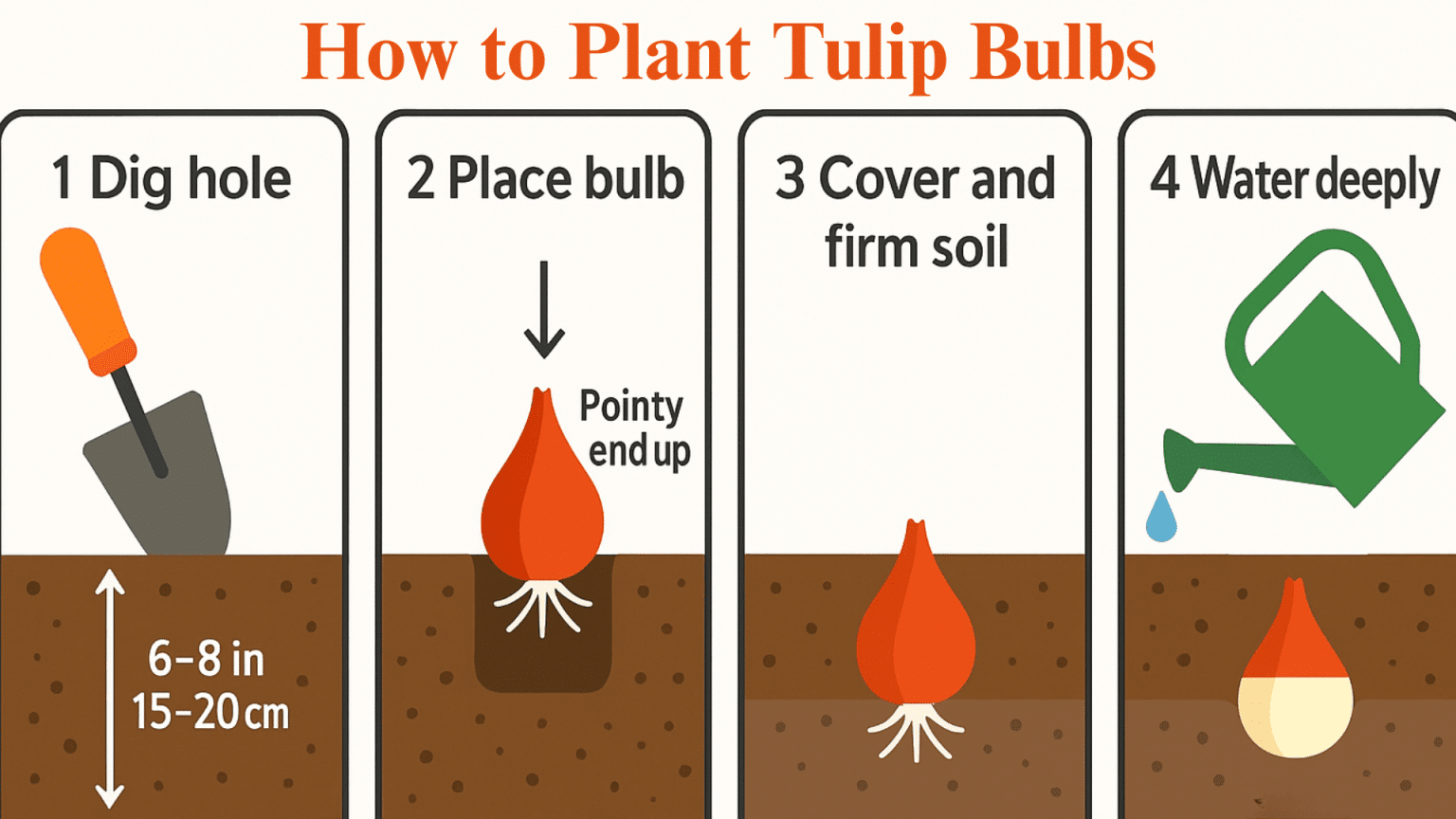
The depth at which tulip bulbs are planted is critical for their survival and subsequent blooming. Planting too shallow exposes bulbs to frost heave, temperature fluctuations, and increased susceptibility to pests, while burying them too deeply can restrict root growth and nutrient absorption. The general rule—planting bulbs 2–3 times their height—serves as a baseline, but adjustments are necessary based on soil type, bulb size, and climate conditions.
For example, a 2-inch (5 cm) bulb should be planted 6–8 inches (15–20 cm) deep, while larger varieties like Darwin hybrids (3 inches or 7.5 cm) may require 8–10 inches (20–25 cm). In sandy soil, which drains quickly and warms faster, bulbs can be planted slightly shallower (e.g., 5–6 inches for a 2-inch bulb) to prevent desiccation. Conversely, clay soil, which retains moisture and stays colder, demands deeper planting (e.g., 7–9 inches) to protect bulbs from frost and compaction. Smaller bulbs, such as species tulips (e.g., Tulipa tarda), benefit from shallower depths (4–6 inches) to encourage early sprouting, while large parrot tulips may thrive at depths of 8–12 inches to support their heavier blooms.
>
> Depth is non-negotiable for tulip longevity. Bulbs planted at incorrect depths are prone to rot, heaving, or failure to bloom. Prioritize soil preparation—loosening clay with organic matter or amending sand with compost—to create an ideal planting environment. Always verify depth post-planting by pressing the soil firmly around the bulb. >
Step-by-Step Guide to Planting Tulip Bulbs in Ground
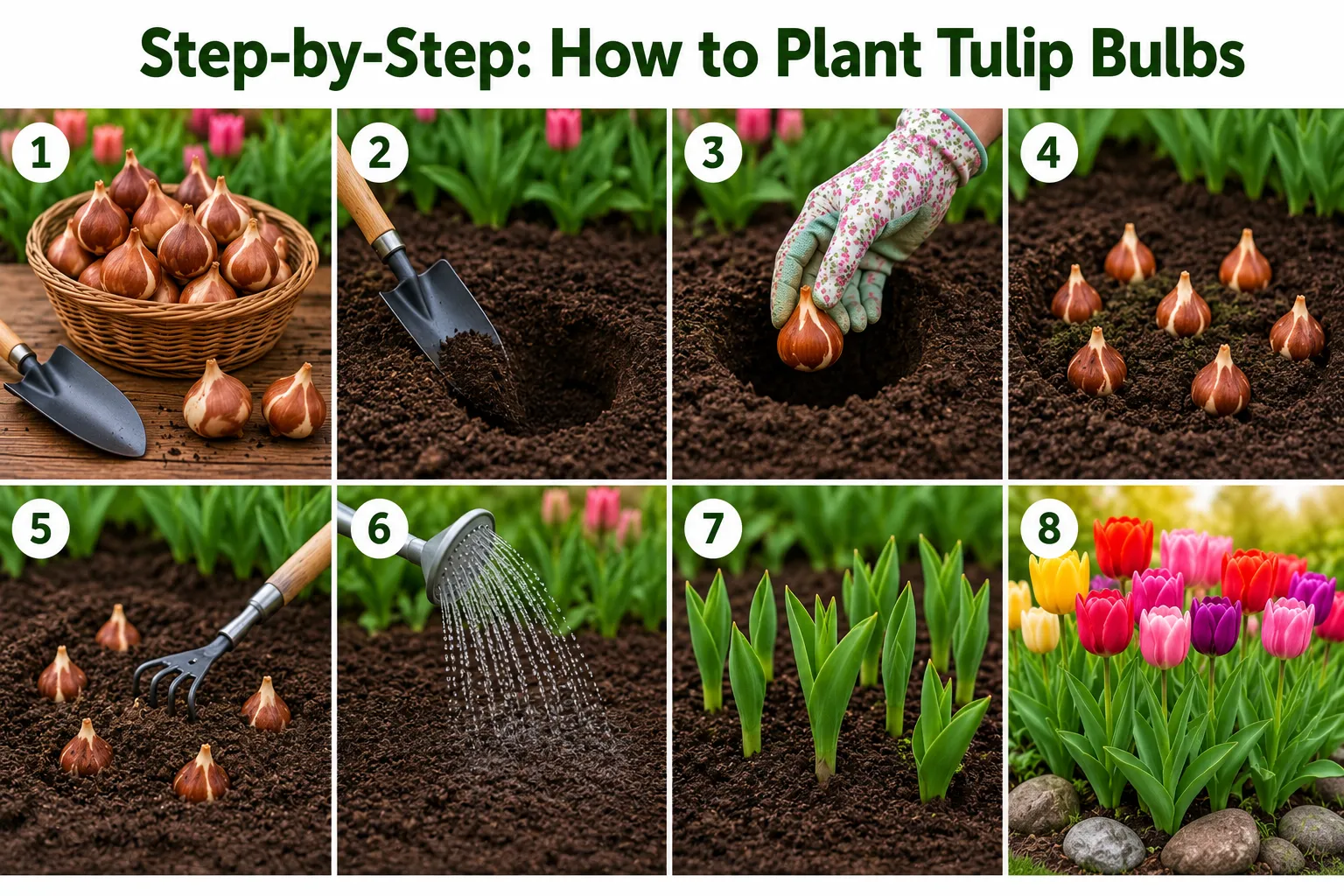
Planting tulips in open ground requires methodical preparation to ensure neat rows, proper spacing, and long-term health. Below is a detailed, numbered guide with accompanying tools, techniques, and common pitfalls to avoid.
Planting tulips in ground demands meticulous preparation to achieve uniformity and health. The following steps outline the process, from marking the site to backfilling, along with essential tools and potential mistakes to avoid.
| Step | Tool Needed | Technique Tips | Common Mistakes |
|---|---|---|---|
| 1. Marking Planting Lines | Garden hose, string line, or chalk |
|
|
| 2. Digging Holes | Bulb planter, trowel, or hand fork |
|
|
| 3. Placing Bulbs | None (use hands) |
|
|
| 4. Spacing Bulbs | Ruler or spacing gauge |
|
|
| 5. Backfilling and Firming | Garden fork, hands |
|
|
Planting Tulips in Containers
Container planting extends tulip cultivation to balconies, patios, and urban gardens where ground planting is impractical. Success hinges on selecting the right pot size, ensuring proper drainage, and layering bulbs for sequential blooms. Unlike ground planting, containers offer controlled environments but require vigilant water and nutrient management.
Pot Selection and Size Choose containers with drainage holes to prevent root rot, and size pots based on bulb quantity: 1 bulb per 1 gallon (3.8 liters) of soil. For example, a 5-gallon (19-liter) pot can accommodate 3–5 small bulbs or 1–2 large bulbs. Terracotta pots, with their porous material, promote airflow and evaporation, reducing moisture retention, while plastic pots retain heat better in cooler climates. Avoid glazed ceramic pots, which can trap excess moisture.
Layering for Continuous Blooms To enjoy tulips from early spring to late spring, layer bulbs in a single container using the "lasagna method." Plant the latest-blooming variety at the bottom (deepest) and the earliest at the top. For instance: - Bottom layer (deepest): Darwin hybrid tulips (late bloom, planted 8–10 inches deep). - Middle layer: Parrot
Planting tulip bulbs is a marriage of patience and strategy, where every detail—from bulb selection to post-planting care—determines whether your garden will flourish or falter. By adhering to soil science, seasonal timing, and creative planting methods, even urban balconies or challenging slopes can host a tulip spectacle. The key lies in understanding that tulips are not just annuals but perennial performers, capable of returning stronger each year with proper stewardship. As you dig into the earth this fall, remember: the bulbs you plant today will gift you with color, fragrance, and joy for seasons to come.
Leave a Comment
Comments are moderated before appearing. The data you submit is processed according to the Privacy Policy of Staging Miltech.