mark twain house hartford ct a literary treasure frozen in time
Table of Contents
- Mark Twain’s Hartford House: A Literary Sanctuary and Architectural Legacy
- Hartford as Twain’s Creative and Financial Hub
- Architectural Features and Twain’s Personal Modifications
- Chronological Timeline of Key Events at the Hartford House
- The House as a Literary Landmark: Twain’s Writing Process & Inspirations
- Twain’s Study and Daily Routines: The Rituals of a Literary Mind
- Hartford’s Influence on Twain’s Major Works: From River to Page
- Twain’s Hartford Letters and Unpublished Writings: Struggles and Triumphs
- Comparing Twain’s Hartford to Other Authors’ Creative Retreats
- Preservation & Restoration: The House Today as a Museum Experience
- Original vs. Restored: The Architecture and Artifacts of Time
- Visitor Journey: A Step-by-Step Exploration of Twain’s World
- Behind the Scenes: Hidden Gems and Rare Artifacts
- Balancing History and Accessibility: Modern Adaptations for All Visitors
- Mark Twain’s Hartford Legacy: A Literary and Cultural Pillar in American History
- Twain’s Literary Influence: Redefining American Literature
- Hartford’s Celebration of Twain: Festivals, Education, and Public Engagement
- Twain’s Hartford: From Lifetime Fame to Modern Controversies and Commemorations
- Organizations and Initiatives Preserving Twain’s Hartford Legacy
- Visiting Mark Twain’s House: Practical Guide & Hidden Gems
- Planning Your Visit: Logistics and Seasonal Highlights
- Iconic Rooms: Where Twain’s Genius and Family Life Intersect
- Hidden Gems: Overlooked Treasures Beyond the Main Tours
- Mark Twain’s House in Pop Culture & Modern Adaptations
- Films, TV Shows, and Documentaries Featuring Mark Twain’s House
- Literary, Artistic, and Musical Inspirations
- Comparative Analysis: Twain’s Portrayal in Media
- Tourism Marketing and Digital Engagement
- Weddings, Photoshoots, and Corporate Events
- The House in the Digital Age: Controversies and Community Efforts
Nestled along Hartford’s tranquil Nook Farm, the Mark Twain House stands as a silent witness to America’s literary golden age, where Samuel Clemens penned masterpieces that redefined storytelling. Between 1871 and 1891, this Victorian gem became the creative crucible for Huckleberry Finn and Tom Sawyer, transforming a bustling Connecticut city into the backdrop of Twain’s sharpest social satire and most enduring humor.
The house’s walls whisper secrets of financial desperation and artistic triumph, its study still echoing with the clatter of Twain’s typewriter as he battled debts while crafting works that would immortalize his name. Beyond its literary legacy, the property reflects Twain’s restless spirit—his hand-carved furniture, the secret nooks where he scribbled sketches, and the grand dining room where Ulysses S. Grant once dined, all preserved under the watchful eye of modern conservators.

Mark Twain’s Hartford House: A Literary Sanctuary and Architectural Legacy
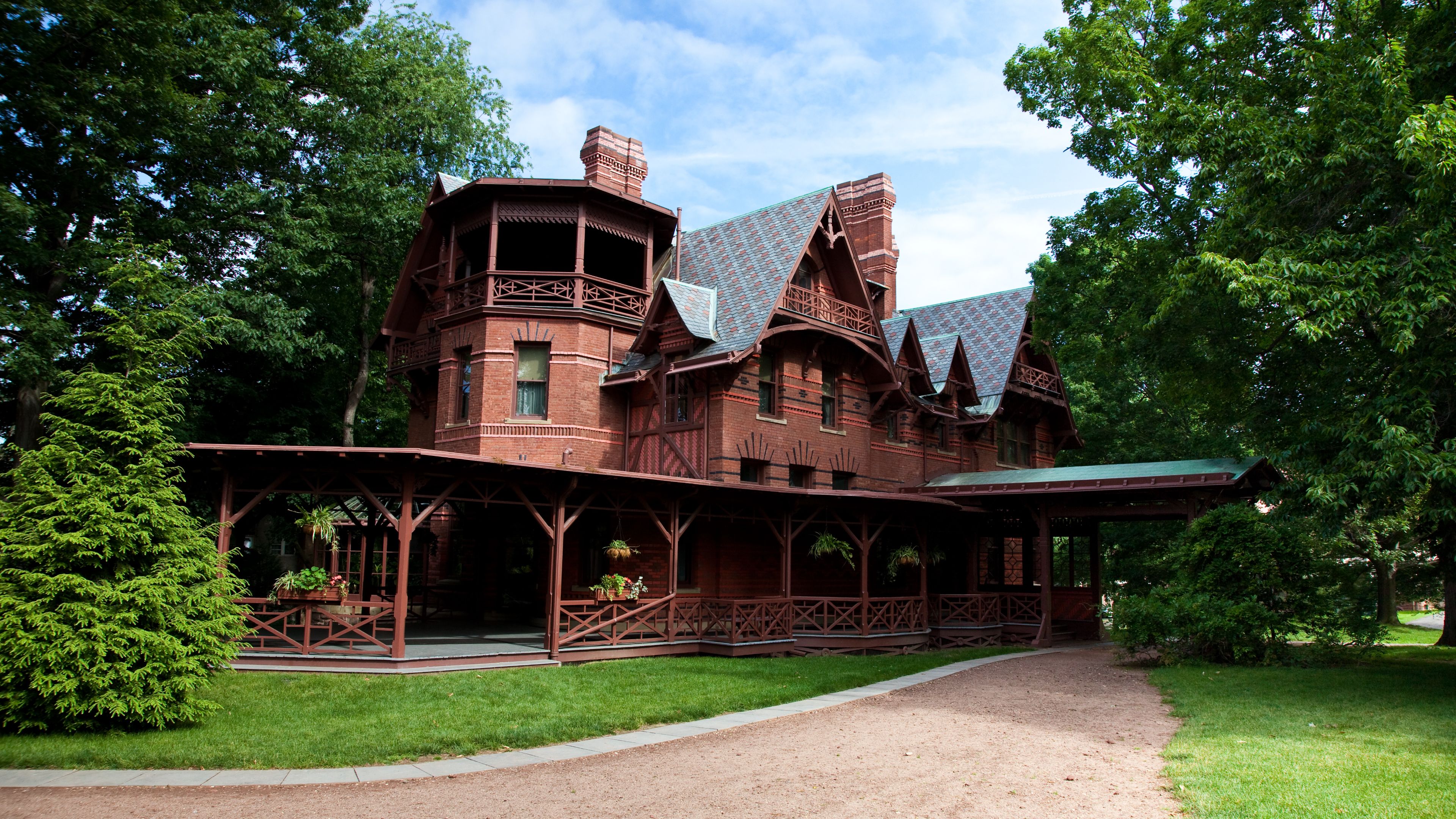
Mark Twain’s Hartford home, a Queen Anne Victorian mansion at 351 Farmington Avenue, stands as a testament to the intersection of American literature and architectural innovation during the late 19th century. Purchased in 1874, this residence became the creative epicenter for Twain’s most celebrated works, including The Adventures of Tom Sawyer (1876) and Adventures of Huckleberry Finn (1885), while also reflecting his evolving personal and financial circumstances. The house’s intricate design, Twain’s hands-on modifications, and its role as a social hub for intellectuals and dignitaries offer a window into the life of one of America’s greatest writers during his most prolific era.
The Hartford house was not merely a backdrop for Twain’s literary genius but an active participant in shaping his work and identity. Its architectural grandeur and Twain’s playful adaptations mirrored his public persona as both a humorist and a man grappling with the pressures of fame and financial instability. Meanwhile, the house’s proximity to Hartford’s burgeoning cultural scene—including the Hartford Saturday Club—cemented its status as a nexus for intellectual discourse and innovation.

Hartford as Twain’s Creative and Financial Hub
Hartford emerged as Mark Twain’s primary residence during the decade spanning 1871 to 1891, a period that coincided with his transition from regional celebrity to national literary icon. The city’s relative tranquility, compared to the bustle of New York or Boston, provided the ideal environment for Twain to focus on writing while also managing his expanding business ventures. His decision to settle in Hartford was influenced by several factors: the city’s growing reputation as a center for publishing and industry, the availability of spacious and affordable properties, and its accessibility via rail networks.
Twain’s move to Hartford marked a shift from his earlier itinerant lifestyle, which had seen him travel extensively as a riverboat pilot, lecturer, and journalist. The stability of Hartford allowed him to establish a permanent workspace, a rarity for writers of his time. His home became a literary fortress, where he could experiment with narrative styles, collaborate with editors, and draft manuscripts in relative privacy. The house’s location in a rapidly developing suburb also positioned Twain within a community of professionals, including lawyers, bankers, and other writers, fostering an environment conducive to both creativity and networking.
During his Hartford years, Twain’s financial fortunes fluctuated dramatically. Initially, his earnings from lectures and early novels like The Innocents Abroad (1869) and The Gilded Age (1873) provided a comfortable lifestyle. However, the late 1870s and early 1880s brought mounting debts due to speculative investments in typesetting machinery and failed business ventures, including the Paxton’s Type Foundry and the Elmira Courier newspaper. These financial struggles cast a long shadow over his Hartford years, contributing to the dark themes of Huckleberry Finn and the satirical edge of works like A Connecticut Yankee in King Arthur’s Court (1889).
Despite these challenges, Hartford remained Twain’s anchor. The city’s infrastructure, including its libraries and printing presses, supported his literary output, while its social circles offered both refuge and inspiration. Twain’s ability to balance domestic life with professional obligations in Hartford underscores the city’s pivotal role in his career, transforming him from a traveling entertainer into a literary institution.
Architectural Features and Twain’s Personal Modifications
The Hartford house, designed by Edward Tuckerman Potter in 1874, exemplifies the Queen Anne style, characterized by its asymmetrical façade, steeply pitched roofs, and elaborate woodwork. When Twain purchased the property, it was already a sprawling 26-room mansion, but he swiftly began modifying it to suit his needs and whims. These alterations were not merely cosmetic; they reflected Twain’s personality—a blend of humor, practicality, and a penchant for grandeur.
One of Twain’s most notable modifications was the addition of a library and study on the second floor, a space he dubbed the "Billiard Room" before repurposing it as his private sanctuary. This room, with its custom-built bookshelves and a hidden door leading to a secret staircase, became the setting for many of his late-night writing sessions. Twain also installed a private elevator to the third floor, a luxury at the time, which he humorously referred to as his "ascending machine" in letters to friends. The house’s exterior was adorned with turret-like structures, bay windows, and intricate gingerbread trim, all of which Twain embraced as part of the Victorian aesthetic he found both charming and functional.
Inside, Twain’s modifications were equally distinctive. He converted the original ballroom into a smoking room, a space where he entertained guests with cigars and lively debates. The kitchen, expanded to accommodate Twain’s large family and frequent visitors, featured state-of-the-art appliances, including a gas-powered range and iceboxes for preserving food—a rarity in the 1880s. Twain’s wife, Livy, oversaw much of the household’s interior design, blending practicality with elegance. For instance, the dining room was furnished with a massive mahogany table that could seat up to 20 guests, reflecting Twain’s love for hosting elaborate dinner parties.
The house’s basement was another area of interest, where Twain installed a private laboratory for his scientific experiments and a printing press for personal projects. This dual-purpose space underscored Twain’s multifaceted identity as both a writer and an inventor. His modifications also extended to the grounds, where he designed a Japanese garden and installed a swing for his daughters, Clara and Jean. These additions not only enhanced the house’s aesthetic appeal but also provided spaces for relaxation and family bonding.
Twain’s architectural choices were often playful and symbolic. For example, he installed a hidden panel behind his desk in the study, which could be opened to reveal a small safe for storing manuscripts and personal papers. This detail reflects his paranoia about theft and piracy, a common concern among writers of his era. Similarly, the house’s multiple fireplaces were not just for warmth but also served as gathering spots for family and friends, reinforcing the home’s role as a communal hub.
Chronological Timeline of Key Events at the Hartford House
The Hartford house witnessed a series of pivotal moments in Mark Twain’s life and career, each leaving an indelible mark on its walls. Below is a chronological overview of the most significant events that unfolded within its confines, illustrating the house’s role as both a creative workshop and a personal refuge.
The house’s construction and Twain’s acquisition were closely tied to his evolving family life. In 1874, Twain purchased the property at 351 Farmington Avenue, just months after the birth of his third child, Susy. The family moved in that same year, marking the beginning of a decade-long residency. The house’s completion coincided with Twain’s growing fame, as The Adventures of Tom Sawyer was published in 1876, a work largely conceived and drafted in Hartford. The novel’s success solidified Twain’s reputation as America’s premier storyteller and provided the financial breathing room needed to expand the house’s amenities.
By 1880, Twain was deep into the writing of Adventures of Huckleberry Finn, a project that occupied much of his time in Hartford. The manuscript underwent numerous revisions in the study on the second floor, with Twain often working late into the night by candlelight. The novel’s publication in 1885 cemented Twain’s legacy as a literary giant, though it also brought renewed scrutiny of his financial affairs. That same year, the family suffered a devastating loss with the death of their eldest daughter, Susy, at the age of 24. The tragedy deeply affected Twain, and the house became a place of mourning as well as creativity.
The 1880s were also marked by Twain’s financial struggles, which reached a crisis point in 1891 when he was forced to declare bankruptcy due to failed investments. Despite this setback, Twain continued to write and entertain in Hartford, hosting notable figures such as President Ulysses S. Grant, who visited the house in 1885 to discuss literary and political matters. Grant’s visit underscored the house’s status as a crossroads for intellectual and political discourse.
Another defining moment occurred in 1891, when Twain’s daughter Jean died of meningitis at the age of 24, mirroring the earlier loss of Susy. These personal tragedies cast a long shadow over the household, yet Twain remained productive, completing works like Pudd’nhead Wilson (1894) during his final years in Hartford. The house also served as a backdrop for his lecture tours, with Twain often preparing speeches and anecdotes in his study before embarking on cross-country trips.
The family’s departure from Hartford in
The House as a Literary Landmark: Twain’s Writing Process & Inspirations
Mark Twain’s Hartford home, known today as the Mark Twain House & Museum, was not merely a residence but the epicenter of his literary genius—a place where geography, daily rhythms, and the architectural surroundings coalesced into a creative force. Unlike the transient settings of his earlier travels, Hartford provided Twain with a stable, inspiring environment that nurtured his most iconic works. The house’s influence extended beyond its walls, embedding itself into the fabric of his writing through vivid descriptions of the Connecticut River, local dialects, and the city’s social tapestry. Twain’s study, a secluded space on the third floor, became the nucleus of his productivity, where he honed his wit, refined his narratives, and transformed Hartford’s landscapes and culture into enduring literary landscapes.
The physical environment of the house shaped Twain’s writing habits in profound ways, from his meticulous routines to his reliance on oral storytelling traditions. Hartford’s role as a microcosm of American society—with its riverfront charm, industrial growth, and class distinctions—fueled his observations, which he wove into works that transcended regional boundaries. Even lesser-known sketches and essays from this period reveal his versatility, offering glimpses into the experimental side of his genius. By comparing Twain’s Hartford years to other authors’ creative retreats, one can discern how geography and domestic spaces became silent collaborators in the birth of literary masterpieces.
Twain’s Study and Daily Routines: The Rituals of a Literary Mind
Twain’s third-floor study in the Hartford house was a sanctuary designed for focus and inspiration, reflecting his disciplined yet whimsical approach to writing. The room, with its bay window overlooking the backyard and the Connecticut River beyond, was equipped with a large desk, a leather armchair, and shelves lined with books, manuscripts, and personal mementos. Twain’s daily routine was structured yet flexible, often beginning his work in the early morning hours when the house was quiet. He famously claimed to write best between 4 AM and 7 AM, a habit he attributed to the tranquility of the predawn hours, free from distractions. His wife, Olivia, would leave a pot of coffee on the landing outside his study, a ritual that underscored the domestic support system that enabled his productivity.
The study’s layout was intentional. Twain positioned his desk near the window to maximize natural light, a detail that mirrored his preference for working outdoors when possible. In warmer months, he would compose on the porch or in the garden, where the sounds of the river and the bustle of Hartford provided a dynamic backdrop. His use of a slate board for drafting ideas—a tool he favored over paper—highlighted his iterative process, where sketches and revisions were as fluid as his thoughts. Twain’s reliance on oral storytelling also shaped his writing habits; he often dictated passages to his daughters or secretary, blending spontaneity with precision. This method not only preserved his distinctive voice but also allowed him to capture the rhythmic cadence of spoken language, a hallmark of his works.
Twain’s study in Hartford was more than a workspace; it was a symbol of his creative identity. The room’s preservation today offers a tangible connection to his process, with original furnishings, including his desk, typewriter, and a collection of pipes he used to aid concentration. Visitors can still see the wallpaper featuring a repeating pattern of ships and waves, a visual motif that may have subconsciously influenced his nautical-themed works, such as Life on the Mississippi. The study’s intimate scale—barely large enough for his desk and chair—emphasizes Twain’s solitary, almost monastic approach to writing, a contrast to the collaborative environments of other literary figures like Dickens or Hemingway.
Hartford’s Influence on Twain’s Major Works: From River to Page
Hartford’s physical and cultural landscape permeated Twain’s writing, transforming the city into a character in its own right. The Connecticut River, with its meandering currents and bustling docks, became a central motif in works like Life on the Mississippi (1883) and The Adventures of Huckleberry Finn (1885). Twain’s detailed descriptions of river life—from steamboat navigation to the social hierarchies aboard—drew directly from his observations in Hartford, where the river was a vital artery connecting the city to the broader world. In Life on the Mississippi, for instance, Twain’s portrayal of the river’s "big, lazy curves" and the "endless variety" of its scenery reflect his firsthand familiarity with the Connecticut’s temperament. Even the river’s role in shaping local dialects and folklore found its way into his writing, as he captured the unique speech patterns of river pilots and townsfolk.
The city’s social hierarchy also provided rich material for Twain’s satire. Hartford in the late 19th century was a city of contrasts, where old-money families rubbed shoulders with industrialists and immigrants. Twain’s observations of these dynamics informed characters like Tom Canty in The Prince and the Pauper (1881), whose experiences in both poverty and privilege mirror the class tensions he witnessed in Hartford. The novel’s exploration of identity and social mobility was partly inspired by the city’s own struggles with economic disparity and the rise of the middle class. Twain’s humor often targeted Hartford’s elite, particularly in sketches like "The Man That Corrupted Hadleyburg" (1900), where the city’s moral ambiguities are laid bare. His use of local references, such as the Aetna Life Insurance Company (where he worked as a director) or the Wadsworth Atheneum (then a new museum), grounded his fiction in a recognizable, if exaggerated, reality.
Twain’s engagement with regional dialects further tied his work to Hartford. The city’s blend of Yankee speech, immigrant accents, and riverine vernacular provided a linguistic palette he exploited to great effect. In Huckleberry Finn, for instance, the character of Jim, a runaway slave from Missouri, speaks in a dialect that Twain claimed to have learned from enslaved people in Hartford’s vicinity. While some of these representations have been critiqued for stereotyping, they also reflect Twain’s immersion in the oral traditions of the era. His ability to mimic voices—from the drawl of a Mississippi steamboat pilot to the clipped tones of a Hartford banker—demonstrated his mastery of dialect as a narrative tool. This linguistic versatility was honed in Hartford, where the city’s multicultural fabric offered endless possibilities for characterization.
Twain’s Hartford Letters and Unpublished Writings: Struggles and Triumphs
Twain’s correspondence and unpublished manuscripts from the Hartford period reveal the duality of his creative process: a blend of triumphant inspiration and profound struggle. His letters often describe the physical and mental toll of writing, particularly during the composition of The Adventures of Huckleberry Finn, which he famously called "the most difficult book I ever wrote." In a letter to his publisher, William Dean Howells, Twain confessed:
"I have been writing Huck Finn for two years, and it is the best book I ever wrote. But it has been a hard pull, and I have had to fight against discouragement all the time. The book is a failure, and I am a failure, and I am going to quit writing."
Yet, despite such self-doubt, Twain persisted, revising Huck Finn relentlessly until it achieved its now-legendary status. His unpublished notes and drafts show the sheer volume of revisions he undertook, often rewriting entire passages to sharpen his satire or deepen his themes. For example, the character of Tom Sawyer underwent significant transformations, evolving from a minor figure in The Adventures of Tom Sawyer (1876) into a more complex, almost grotesque parody of chivalry in Huck Finn.
Twain’s letters also highlight his collaborative process with Olivia, who served as his first reader and critic. She would often challenge his ideas, leading to debates that refined his work. In one letter to his daughter Susy, Twain described Olivia’s role:
"She is the best critic I ever had, and she will not let me get away with anything that is not first-rate. She makes me rewrite whole chapters sometimes, and I am glad of it, for she has a keen eye for nonsense."
This dynamic underscores the domestic partnership that sustained Twain’s output, a contrast to the solitary mythos often associated with writers. His unpublished sketches from Hartford, such as "The War Prayer" (1905), reveal his evolving social consciousness, a theme that gained urgency during his later years in the city. These lesser-known works offer a window into Twain’s experimental side, where he grappled with themes of war, morality, and American identity long before they became central to his legacy.
Comparing Twain’s Hartford to Other Authors’ Creative Retreats
Twain’s Hartford years share striking parallels with other authors’ geographically anchored creative periods, though each writer’s relationship with place yielded distinct results. Er
Preservation & Restoration: The House Today as a Museum Experience
Mark Twain’s Hartford home stands as a testament to both literary genius and architectural ingenuity, preserved meticulously to reflect its original grandeur while adapting to modern museum standards. The journey from a private residence to a public museum involved decades of advocacy, restoration, and technological integration, ensuring that visitors today can step into the world of America’s most celebrated humorist. The balance between historical authenticity and contemporary accessibility remains a hallmark of the Mark Twain House & Museum, where every restored beam, artifact, and interactive exhibit tells a story of Twain’s life and legacy.
The preservation of the house began shortly after Twain’s death in 1910, when his daughter Clara and son-in-law Harry Baker purchased the property to prevent demolition or commercial development. Their efforts marked the first critical milestone in its conservation, but it was the Mark Twain House Association, founded in 1935, that solidified the home’s future as a museum. Key figures like Ethel Twain Severy, Mark’s granddaughter, and James L. Ford, a preservationist and historian, played pivotal roles in securing funds and rallying support. In 1963, the house was designated a National Historic Landmark, and by 1968, it became a National Historic Site, further cementing its cultural significance. The most transformative restoration phase occurred in the 1990s, when the museum underwent a $15 million renovation to stabilize the structure, restore original interiors, and enhance visitor accessibility. Today, the house is managed by the Mark Twain House & Museum, a non-profit organization committed to preserving Twain’s legacy while engaging diverse audiences.
Original vs. Restored: The Architecture and Artifacts of Time
The Mark Twain House is a living museum where original features coexist with painstakingly restored elements, creating an immersive experience that honors the past while addressing the challenges of maintaining a 19th-century home in the 21st century. Challenges such as structural decay, environmental damage, and evolving conservation techniques have required continuous adaptation. For instance, the house’s original Victorian-era woodwork, including intricate moldings and stained glass, has undergone non-invasive treatments to combat woodworm infestations and moisture damage. Meanwhile, period-accurate wallpapers, such as the floral damask in the parlor, were recreated using historic patterns and pigments to match the 1870s aesthetic. The museum’s approach to restoration prioritizes reversible methods—techniques that allow future generations to undo interventions if needed—ensuring the integrity of the original materials.
One of the most significant restoration milestones was the reconstruction of the billiards room, a space Twain used for both recreation and writing. Original elements like the green baize table and hand-carved pool cues were preserved, while missing pieces were replicated using archival photographs and contemporary craftsmanship. The library, another focal point, retains Twain’s personal collection of books, including rare first editions of his works and those of his contemporaries like Charles Dickens and Edgar Allan Poe. However, some books were digitally cataloged and replicated to prevent handling damage, a compromise that reflects the museum’s commitment to balancing preservation with public engagement.
Visitor Journey: A Step-by-Step Exploration of Twain’s World
A tour of the Mark Twain House begins at the front gate, where visitors are greeted by a life-sized statue of Twain in his later years, a modern addition that sets the tone for the experience. The orientation film in the introductory gallery introduces Twain’s life and the house’s history, blending archival footage, actor reenactments, and animated maps to contextualize his time in Hartford. From there, visitors follow a chronological path through the home’s public and private spaces, guided by audio guides available in multiple languages.
The tour starts in the parlor, where original family portraits—including a daguerreotype of Twain’s wife, Olivia, and their daughters—hang above the fireplace. The restored Victorian-era sofa and side tables invite reflection on Twain’s social life, while interactive kiosks allow visitors to explore digitized letters and manuscripts. Moving to the dining room, guests encounter a recreated table setting from Twain’s era, complete with handwritten menus and place cards. A multimedia presentation projects excerpts from Twain’s writings, highlighting his wit and social commentary.
The heart of the tour is Twain’s study, a space where he wrote classics like The Adventures of Huckleberry Finn and Tom Sawyer. The original oak desk, still bearing ink stains from his pen, sits beneath a restored skylight that mimics the natural light Twain relied upon. Visitors can examine a replica of his typewriter (one of the first in America) and listen to audio clips of his voice through a hidden speaker system integrated into the desk. Nearby, a digital archive displays handwritten drafts of his works, allowing close inspection of his editing process.
The tour concludes in the billiards room and kitchen, where hands-on activities—such as writing with a quill pen or trying on period clothing—bring Twain’s daily life to life. The gift shop and research library offer further engagement, with rare books, replicas of Twain’s pipes, and educational materials for all ages.
Behind the Scenes: Hidden Gems and Rare Artifacts
Beyond the curated exhibits, the Mark Twain House holds hidden treasures that offer glimpses into Twain’s private world. One such secret is the "Huck Finn Writing Nook", a small, secluded space behind a bookshelf in his study where Twain allegedly retreated to write. The nook was discovered during restoration when workers noticed an unusual indentation in the wall, later confirmed by historical records. Today, it is marked by a discreet plaque and illuminated to draw attention to its significance.
Another fascinating artifact is Twain’s personal ledger, a leather-bound book where he recorded financial transactions, literary ideas, and even jokes. The ledger, now preserved in a climate-controlled display case, reveals his meticulous nature and the intersection of his personal and professional life. Visitors can also explore Olivia Twain’s sewing room, where her embroidered samplers and hand-stitched quilts showcase the craftsmanship of the era. A rare find is Twain’s traveling trunk, filled with personal items from his global journeys, including a Japanese fan and a Egyptian scarab, reflecting his fascination with world cultures.
The house also preserves family heirlooms, such as the Twain children’s toys, including a wooden rocking horse and hand-carved dolls, which offer insight into their upbringing. These artifacts are rotated periodically to minimize exposure to light and humidity, ensuring their longevity while still delighting visitors.
Balancing History and Accessibility: Modern Adaptations for All Visitors
The Mark Twain House & Museum exemplifies how historical sites can respect their past while embracing modern accessibility. For visitors with disabilities, the museum offers wheelchair-accessible ramps, audio descriptions for visually impaired guests, and tactile models of key artifacts. The study tour, for instance, includes a braille guide and enlarged print materials, while sign language interpreters are available upon request. The audio guides feature clear narration and adjustable volume, catering to diverse needs.
Children are engaged through interactive stations, such as a "Create Your Own Adventure" activity where they design a character inspired by Twain’s stories. The museum also hosts family-friendly workshops, including quill pen writing classes and storytelling sessions that adapt Twain’s humor for younger audiences. For school groups, curriculum-aligned programs connect Twain’s life to themes like American literature, social justice, and historical preservation.
Technological innovations further bridge the gap between past and present. Virtual reality experiences allow visitors to "step into" Twain’s study or imagine the house during his lifetime, while augmented reality apps overlay historical images onto current views. These tools not only enhance engagement but also educate without compromising the integrity of the original space.
The museum’s sustainability efforts also reflect modern values, including energy-efficient lighting, water conservation systems, and eco-friendly cleaning products to preserve the historic interiors. By integrating these adaptations, the Mark Twain House ensures that Twain’s legacy remains vibrant and inclusive for future generations.
Mark Twain’s Hartford Legacy: A Literary and Cultural Pillar in American History
Mark Twain’s years in Hartford (1871–1891) transformed him from a celebrated but regional writer into America’s most iconic literary figure of the 19th century. The city became the crucible for his artistic evolution, where he penned classics like The Adventures of Tom Sawyer (1876) and Adventures of Huckleberry Finn (1885), works that redefined American literature with their sharp social commentary and unparalleled storytelling. Beyond his literary genius, Twain’s influence permeated Hartford’s cultural identity, shaping its intellectual life, economic growth, and enduring connection to literary tourism. His legacy persists today through institutional partnerships, public commemorations, and a dynamic interplay between local pride and critical reassessment of his complex works.
Twain’s Hartford years solidified his reputation as a voice of American democracy, humor, and moral ambiguity, challenging societal norms while captivating audiences nationwide. The city’s embrace of his residency—marked by grand public lectures, subscriptions to his works, and even a local newspaper (The Hartford Evening Press) that he briefly owned—elevated his status beyond regional fame. Yet, his Hartford legacy is not merely nostalgic; it reflects a living dialogue between the past and present, where controversies over his racial depictions in Huckleberry Finn coexist with celebrations of his wit and innovation. This duality underscores how Twain’s Hartford remains a site of both reverence and reckoning, attracting scholars, tourists, and locals alike.
Twain’s Literary Influence: Redefining American Literature
Mark Twain’s Hartford period marked a turning point in American literary history, as he transitioned from a journalist and travel writer to a master of the novel form. His works during this era—particularly The Adventures of Tom Sawyer and Huckleberry Finn—introduced a distinctively American voice, blending vernacular speech, regional humor, and biting satire. These novels challenged the sentimental and idealized portrayals of American life prevalent in 19th-century literature, instead offering a raw, often subversive critique of racism, class, and hypocrisy.
Twain’s use of the Mississippi dialect in Huckleberry Finn revolutionized narrative techniques, influencing later writers like Ernest Hemingway, who famously declared, “All modern American literature comes from one book by Mark Twain called Huckleberry Finn.” His ability to merge humor with social commentary also set a precedent for writers such as William Faulkner and John Steinbeck, who explored similar themes of moral ambiguity and regional identity. In Hartford, Twain’s literary experiments were not confined to his writing desk; he engaged in lively debates with intellectuals, including Harriet Beecher Stowe and Charles Dudley Warner, further cementing his role as a cultural arbiter.
The city’s intellectual climate during Twain’s residency fostered an environment where literature was both a commercial and artistic endeavor. Hartford’s subscription libraries, literary salons, and the burgeoning publishing industry provided Twain with an audience eager for his insights. His lectures at local venues, such as the Hartford Music Hall, drew capacity crowds, reinforcing his status as a public intellectual. Even today, his Hartford works are studied as foundational texts in American literature courses, with Huckleberry Finn frequently appearing on lists of the greatest novels ever written.
Hartford’s Celebration of Twain: Festivals, Education, and Public Engagement
Hartford’s commitment to preserving and celebrating Twain’s legacy extends far beyond the walls of the Mark Twain House & Museum. The city hosts an array of annual events, educational initiatives, and collaborations that keep Twain’s spirit alive for residents and visitors. These efforts reflect a deliberate effort to integrate Twain’s story into Hartford’s cultural DNA, ensuring his influence remains relevant across generations.
One of the most prominent celebrations is the Mark Twain Festival, an annual event held in September that transforms the city into a playground of literature, music, and history. The festival features readings by contemporary authors, theatrical performances of Twain’s works, and even reenactments of his famous lectures. Past events have included collaborations with the Hartford Stage, a Tony Award-winning theater, to stage adaptations of The Celebrated Jumping Frog of Calaveras County and Tom Sawyer. The festival also engages local schools through writing competitions and workshops, encouraging students to explore Twain’s themes in their own creative work.
Beyond festivals, Hartford’s educational institutions play a pivotal role in sustaining Twain’s legacy. The University of Hartford and Central Connecticut State University (CCSU) offer courses dedicated to Twain studies, examining his literary techniques, historical context, and enduring influence. CCSU’s Mark Twain Project, housed within its Mark Twain Papers & Project, is a research hub that publishes critical editions of Twain’s works, hosts scholarly conferences, and digitizes his manuscripts for global access. The project’s collaborations with the Mark Twain House & Museum provide students and researchers with direct access to primary sources, bridging academic study with tangible connections to Twain’s Hartford life.
Local theaters and arts organizations also contribute to Twain’s cultural footprint. The Hartford Symphony Orchestra has commissioned works inspired by Twain’s life, while the Hartford Public Library hosts regular lectures and book clubs centered on his writings. Even the city’s street names and plaques—such as the Mark Twain Memorial Park in East Hartford—serve as subtle reminders of his impact. These initiatives ensure that Twain’s legacy is not confined to museums or textbooks but remains a vibrant part of Hartford’s daily life.
Twain’s Hartford: From Lifetime Fame to Modern Controversies and Commemorations
During Twain’s lifetime, Hartford’s reception of him was a mix of admiration, curiosity, and occasional skepticism. While he was widely celebrated as a humorist and public figure, his more controversial works—particularly Huckleberry Finn—sparked debates about race and morality. Critics accused Twain of perpetuating racial stereotypes through characters like Jim, the enslaved man, despite his later statements advocating for racial equality. Twain himself acknowledged the complexities of his portrayal, writing in a letter, “I am sorry to say that there is so little sympathy expressed for Jim. Were I to live, I would write a book that would make the whole nation hold its breath.”
Today, Twain’s legacy in Hartford is marked by a more nuanced and often critical lens. The Mark Twain House & Museum has embraced these discussions, offering guided tours that explore the racial themes in his works and his evolving views on slavery and equality. Exhibits like “Mark Twain and Race” provide context for Huckleberry Finn, highlighting Twain’s personal struggles with racism and his friendships with African American figures such as Frederick Douglass and George Washington Cable. This approach reflects a broader trend in literary museums to present authors in their full historical and ethical complexity.
Hartford’s commemorations also extend to lesser-known aspects of Twain’s life, such as his business ventures and personal relationships. The city’s Twain Day celebrations, held annually on November 30 (his birthday), often feature discussions on his financial failures, including the collapse of his American Publishing Company in 1894—a period that led to his family’s move to Europe to escape debt. These events humanize Twain, portraying him not just as a literary giant but as a man grappling with the pressures of fame and financial instability.
The contrast between Twain’s lifetime reputation and his modern-day image underscores how cultural attitudes toward literature and race have evolved. While 19th-century audiences may have embraced his humor without question, today’s visitors and scholars engage with his work through a critical framework that acknowledges both his genius and his limitations. This evolution is evident in Hartford’s public discourse, where Twain’s legacy is celebrated while his flaws are openly examined—a testament to the city’s commitment to honest historical storytelling.
Organizations and Initiatives Preserving Twain’s Hartford Legacy
A robust network of organizations, institutions, and community initiatives ensures that Mark Twain’s Hartford legacy remains dynamic and accessible. These entities collaborate to educate the public, support academic research, and integrate Twain’s story into Hartford’s cultural and economic fabric. Below are key players driving this mission:
Educational and Research Institutions The Mark Twain House & Museum leads the charge in preserving Twain’s physical and intellectual legacy. Its educational programs include school tours tailored to different grade levels, teacher workshops, and a Young Authors Program that encourages local students to write in Twain’s style. The museum also partners with Hartford Public Schools to develop curriculum resources, ensuring Twain’s works remain relevant in classrooms. Additionally, its digital archives provide global access to Twain’s manuscripts, letters, and artifacts, making his story accessible to researchers worldwide.
Academic Collaborations Universities in Hartford leverage Twain’s local ties to offer specialized courses and research opportunities. The University of Hartford’s English Department features seminars on Twain’s literary techniques, while Central Connecticut State University’s Mark Twain Project publishes critical editions of his works and hosts international conferences. The Yale University’s Beinecke Library, though located in New Haven, collaborates with Hartford
Visiting Mark Twain’s House: Practical Guide & Hidden Gems
Exploring Mark Twain’s Hartford home is more than a tour—it’s a journey into the heart of American literature, where every room whispers stories of wit, family life, and creative genius. This guide ensures visitors navigate the experience with insight, from logistical planning to uncovering the house’s most evocative and lesser-known treasures. Whether you’re a first-time admirer, a photography enthusiast, or a scholar tracing Twain’s footsteps, these details will elevate your visit into a memorable pilgrimage.
Planning Your Visit: Logistics and Seasonal Highlights
Mark Twain’s Hartford House, operated by the Mark Twain House & Museum, offers structured tours that cater to diverse interests, with seasonal variations enhancing the experience. The house is open year-round, but timing your visit can significantly influence accessibility, crowd levels, and thematic events.
Best Times to Visit The museum’s calendar aligns with Twain’s life and literary milestones, making certain seasons particularly rich: - Spring (March–May): The "Mark Twain’s Birthday Bash" (November 30) is celebrated in March with reenactments, themed tours, and family-friendly activities. Spring also marks the reopening of outdoor exhibits, including the restored garden where Susy Twain is buried. - Summer (June–August): Peak tourist season, but also when the "Twain at Noon" lecture series runs, featuring scholars discussing Twain’s works. Evening "Ghost Tours" (select dates) explore the house’s eerie folklore, such as the legend of Susy’s ghost lingering near her grave. - Fall (September–November): The "Harvest Festival" in October transforms the grounds into a 19th-century scene, with period-accurate food, crafts, and readings from Twain’s letters. Cooler weather also makes the Connecticut Riverboat tours (detailed below) more comfortable. - Winter (December–February): Quieter visits with fewer crowds, ideal for photographers seeking crisp, atmospheric shots. The "Holiday Open House" in December features Victorian-era decorations and caroling.
Ticketing and Tour Options - Standard Admission: $25 for adults, $22 for seniors (65+), $15 for students (with ID), and $12 for children (6–17). Children under 6 enter free. - Tour Durations: The Guided House Tour (1.5 hours) covers all public rooms, while the Extended Tour (2 hours) includes the private quarters (additional $10). The "Behind the Scenes" tour (select Saturdays, $35) offers access to restoration areas and archives. - Special Access: - Membership Perks: Annual memberships ($65–$150) grant unlimited visits, discounts on events, and early access to exhibitions. Members also receive a free guided tour upon renewal. - Private Tours: Ideal for groups (10+ people), these can be customized for scholars, writers’ retreats, or corporate events. Contact the museum 6 months in advance for availability. - Accessibility: Wheelchair-accessible tours are available upon request, with audio guides in ASL and large-print formats.
Nearby Attractions for a Full Hartford Experience Combine your visit with explorations of Hartford’s literary and cultural landscape: - Harriet Beecher Stowe Center (0.5 miles): The home of the abolitionist author of Uncle Tom’s Cabin, offering tours and a museum dedicated to 19th-century social reform. Seasonal Event: The "Stowe & Twain Tea" in June pairs the two authors’ legacies with period-themed refreshments. - Nook Farm Neighborhood (1 mile): A historic enclave where Twain, Stowe, and other luminaries lived. Self-guided walking maps are available at the Hartford History Museum. - Connecticut Riverboat Tours (2 miles): Departing from Hartford’s Riverfront, these cruises replicate Twain’s experiences on the Mississippi, with narrators quoting Life on the Mississippi. The "Twain’s River Journey" (July–September) includes a stop at the house’s original icehouse (now an exhibit). - Dining Recommendations: - The Old State House Tavern (0.3 miles): A historic restaurant serving 18th-century New England fare, including "Mark Twain’s Favorite"—a whiskey cocktail named in his honor. - Chela’s Mexican Restaurant (1 mile): A local favorite for lunch, offering a "Twain’s Travel Menu" (seasonal) inspired by his global adventures. - The Farmington River Brewing Co. (3 miles): A craft brewery hosting "Literary Pub Nights" with Twain-themed trivia.
Iconic Rooms: Where Twain’s Genius and Family Life Intersect
The house’s layout reflects Twain’s dual roles as a public figure and a private man, with each room offering a distinct window into his world. Focus on these spaces for their historical significance, emotional resonance, and visual appeal.
Twain’s Study: The Birthplace of Literary Masterpieces Located on the second floor, this room is the epicenter of Twain’s creative process, where he penned The Adventures of Huckleberry Finn and The Prince and the Pauper. Key features include: - The Smoking Jacket: A red velvet robe displayed in a glass case, said to be Twain’s writing attire. Visitors often remark on its vibrant hue, which contrasts with the room’s muted tones. - The Typewriter: A 1901 Remington No. 2, one of the earliest electric typewriters Twain used. The museum’s interactive exhibit allows visitors to type a line from Tom Sawyer on a replica. - The Wall Murals: Twain and his daughter Jean painted whimsical murals depicting scenes from his travels, including a steamboat on the Mississippi and a Parisian café. The murals were rediscovered in 1996 during restoration and are now protected behind UV-filtered glass. - Photography Tip: Capture the typewriter and smoking jacket in the same frame by positioning yourself near the north window, where natural light enhances the colors without glare.
The Dining Room: A Hub of Intellectual Gatherings This oak-paneled room hosted legendary figures like President Ulysses S. Grant, author William Dean Howells, and abolitionist Frederick Douglass. Notable details: - The Mahogany Sideboard: Engraved with Twain’s signature and the date 1874, it was a gift from his wife, Livy. The inlaid woodwork reflects Hartford’s elite craftsmanship. - The Family Table: Set for 12 guests, it symbolizes Twain’s belief in hospitality as a democratic act. Reenactments during tours depict dinner conversations about politics and literature. - The Hidden Carving: On the dining room door, Twain carved a small fish—a nod to his Mississippi roots and a private joke with his children. - Photography Tip: Shoot the sideboard from the doorway to include the fish carving. Use the chandelier’s light to create depth in evening visits.
The Children’s Playroom: A Glimpse into Twain’s Domestic Life This sunlit room on the third floor was the domain of Twain’s three daughters—Susy, Jean, and Clara—and offers a rare look at Victorian-era childhood. Highlights: - The Dollhouse: A miniature replica of the house, built by Twain himself. It includes tiny furniture and even a working elevator (a nod to Hartford’s modern conveniences). - The Murals: Jean Twain painted fantastical scenes, including a unicorn and a dragon, reflecting her love of folklore. - Susy’s Desk: A small writing table where Susy composed letters and poems. Nearby, a locked drawer contains her personal diary, accessible only to scholars. - Photography Tip: Frame shots of the dollhouse and murals by standing in the corner near the window to avoid shadows. The pastel colors of the room photograph best in morning light.
Hidden Gems: Overlooked Treasures Beyond the Main Tours
The house and grounds hold subtle yet profound details that often escape casual visitors. These elements add layers to Twain’s legacy and provide unique photo opportunities.
The Garden of Remembrance: Susy Twain’s Final Resting Place Located behind the house, this quiet garden is marked by a simple white headstone inscribed with Susy’s name and the dates 1872–1896. She died at 24 from meningitis, a loss that deeply affected Tw
Mark Twain’s House in Pop Culture & Modern Adaptations
Mark Twain’s Hartford home transcends its role as a historical landmark, embedding itself deeply into modern storytelling, visual media, and cultural discourse. The house’s iconic architecture and its association with one of America’s most celebrated writers have made it a recurring muse for filmmakers, musicians, artists, and digital creators. From cinematic recreations to viral social media trends, Twain’s Hartford residence continues to inspire adaptations that bridge the gap between 19th-century literature and contemporary creativity. Its influence extends beyond mere representation, shaping how audiences perceive Twain’s legacy—both as a literary genius and a complex figure whose life and work remain open to reinterpretation.
Films, TV Shows, and Documentaries Featuring Mark Twain’s House
The house has served as a tangible backdrop for numerous productions, often requiring meticulous permissions and historical accuracy. In The Adventures of Huckleberry Finn (1993), directed by Stephen Sommers, exterior shots of the house were used to evoke the setting of Twain’s classic novel, though the interiors were recreated on set. Behind-the-scenes details reveal that production teams collaborated closely with the Mark Twain House & Museum to ensure authenticity, including replicas of Twain’s study and the iconic white picket fence.
Documentaries like American Experience: Mark Twain (PBS, 2010) incorporated archival footage and on-location interviews at the house, using its spaces to contextualize Twain’s writing process. The museum’s archives provided props and manuscripts for visual storytelling, while modern CGI enhanced scenes depicting Twain’s life in Hartford. Even lesser-known productions, such as the 2017 PBS documentary Mark Twain in His Own Words, featured the house as a central location, blending historical reenactments with preserved interiors.
Literary, Artistic, and Musical Inspirations
Twain’s Hartford home has inspired modern literature, visual art, and music, often serving as a symbolic anchor for narratives exploring themes of irony, satire, and American identity. In Erik Larson’s The Devil in the White City, while not directly centered on Twain, the house’s era and Hartford’s Gilded Age atmosphere parallel the novel’s duality between progress and moral decay. Similarly, T.C. Boyle’s The Women (2009) draws loose parallels to Twain’s complex relationships with women, with the house’s domestic spaces subtly referenced as a metaphor for public and private personas.
In music, The Decemberists’ album The Hazards of Love (2009) includes references to Twain’s Hartford years, with lyrics like "Hartford, Connecticut, where the rivers run wide" evoking the Connecticut River’s role in Twain’s life. The band’s live performances have occasionally featured projections of the house’s exterior, blending Twain’s legacy with modern folk storytelling. Additionally, Tom Waits’ Rain Dogs (1985) contains thematic echoes of Twain’s satirical tone, though not explicitly tied to the house. Visual artists like Andrew Wyeth, known for his depictions of rural Americana, have been influenced by Twain’s Hartford aesthetic, though no direct artwork explicitly features the house.
Graphic novel adaptations, such as Blake Hoena’s Mark Twain: The Adventures of Tom Sawyer (2013), use the house as a backdrop for illustrated scenes, merging historical accuracy with comic-book dynamism. The museum’s archives provided reference materials, ensuring that Twain’s study and the riverfront views were faithfully represented.
Comparative Analysis: Twain’s Portrayal in Media
Twain’s image has evolved across different media formats, from reverent biographies to satirical parodies. Below is a comparative table highlighting key portrayals:
| Media Type | Example | Depiction of Twain’s House | Cultural Impact |
|---|---|---|---|
| Classic Biographies | Justin Kaplan’s Mr. Clemens and Mark Twain (2010) | Detailed descriptions of the house as Twain’s creative sanctuary, with archival photos and floor plans. | Established the house as a pilgrimage site for literary scholars; reinforced its role in Twain’s writing process. |
| Modern Biopics | Mark Twain’s "The Man Who Corrupted Hadleyburg" (2018, short film) | Exterior shots of the house used to set the story’s small-town moral dilemmas; interiors digitally recreated. | Brought Twain’s lesser-known works to modern audiences; sparked discussions on satire in contemporary media. |
| Satirical Parodies | The Simpsons (Episode: "Bart vs. Australia," 1990) | Homer Simpson’s house mimicked Twain’s Hartford design as a joke about "typical American architecture." | Cemented Twain’s image as a cultural icon in pop culture; the house became shorthand for "quintessential American home." |
| Educational Media | American Experience: Mark Twain (PBS, 2010) | On-location interviews in Twain’s study; drone footage of the house and surrounding Hartford. | Educated millions on Twain’s Hartford years; increased tourism and digital engagement with the museum. |
Tourism Marketing and Digital Engagement
The house’s role in tourism extends beyond passive observation, with the Mark Twain House & Museum leveraging digital and social media strategies to attract modern audiences. Instagram campaigns highlight the house’s Instagram-worthy spots, such as Twain’s study (with its iconic river views) and the secret library door hidden behind a bookshelf. TikTok trends have featured AR filters that superimpose Twain’s ghostly figure into historical photos of the house, while virtual tours allow remote visitors to explore the interiors via 360-degree videos.
Collaborations with influencers, such as travel bloggers and literary YouTubers, have amplified the house’s reach. Armchair Traveler’s 2022 video, "Mark Twain’s House: A Writer’s Sanctuary," garnered over 500,000 views by blending historical context with personal storytelling. The museum also partners with Writers Residency programs, inviting modern authors to stay in the house and share their creative processes online, further blurring the line between past and present.
Weddings, Photoshoots, and Corporate Events
The house’s grandeur and historical prestige have made it a coveted venue for weddings, photoshoots, and corporate events. In 2019, actor Jeffrey Wright hosted a private reception in the house’s ballroom, which was restored to its 1880s elegance. The event drew media attention, positioning the house as a luxury rental for high-profile gatherings. Photographers frequently use the house’s riverfront terrace for editorial shoots, as seen in Vogue’s 2021 feature on "Historic American Landscapes."
Corporate clients, including Hartford-based insurance firms, have rented the house for exclusive events, with proceeds supporting its preservation. Notable guests at these events have included author Colson Whitehead and actor Bryan Cranston, whose visits were documented in the museum’s social media channels. The house’s wedding chapel, a restored 19th-century parlor, has hosted over 50 ceremonies since 2015, with couples drawn to its literary romance.
The House in the Digital Age: Controversies and Community Efforts
Twain’s Hartford home has become a focal point in online debates, particularly regarding his racial views and humor. Reddit threads and Twitter discussions often contrast Twain’s progressive stances (e.g., anti-imperialism) with his problematic stereotypes, as seen in The Adventures of Huckleberry Finn. The museum addresses these tensions through interactive exhibits, such as "Twain’s Complex Legacy," which invites visitors to engage with primary sources and modern critiques.
Crowdfunding campaigns, like the 2020 "Save Twain’s Study" initiative, raised over $120,000 to restore the writer’s workspace, demonstrating community investment in preserving the site. Meanwhile, fan fiction communities on platforms like Wattpad have reimagined Twain’s Hartford years, with
Mark Twain’s Hartford home is more than a museum—it is a living archive of American ingenuity, where every restored wallpaper and child’s toy tells a story of resilience, wit, and the power of place to shape genius. As visitors step through its doors, they don’t just tour a house; they walk the same halls where a man turned his Mississippi upbringing into global folklore, proving that some legacies are not just written in ink but etched into the very wood and stone of history.
Leave a Comment
Comments are moderated before appearing. The data you submit is processed according to the Privacy Policy of Staging Miltech.