william the refrigerator perry redefined nfl humor forever
Table of Contents
- The Birth of a Cultural Phenomenon: Wade Perry, William the Refrigerator, and the 1990s Advertising Revolution
- From Wade Perry to William the Refrigerator: The Origin of the Nickname
- Cultural Impact: How the Commercials Redefined 1990s Advertising and Humor
- A Timeline: Wade Perry’s Football Career and the Rise of William the Refrigerator
- Behind the Scenes: Creating the William the Refrigerator Persona
- The "William the Refrigerator" Commercials: Breakdown and Legacy
- Script, Visuals, and Humor: Parodying NFL Draft Hype
- Production Process: Filming, Editing, and Distribution
- Alternative Versions and Bloopers: Behind-the-Scenes Absurdity
- Iconic Commercials: A Timeline of Cultural Impact
- Wade Perry’s NFL Career Trajectory: From Draft Prospect to Cultural Icon
- Draft Selection and Training Camp Challenges
- College Football Statistics and NFL Expectations
- Perry’s Reflections on the NFL and the "William" Persona
- Post-NFL Life and the Enduring Legacy of "William the Refrigerator"
- William Shatner’s Iconic Voice and the Unbreakable Chemistry with Wade Perry
- Shatner’s Method: Crafting William’s Distinctive Persona
- Behind-the-Scenes Collaboration: Perry and Shatner’s Rehearsal Dynamics
- Shatner’s Analysis: Why the Commercials Resonated
- Comparative Table: Shatner’s Acting Career vs. Voice Work in Commercials
- The Cultural and Pop Culture Impact of "William the Refrigerator"
- Parodies and Homages in TV, Film, and Music
- Chronological List of Major Pop Culture References
- Fan Theories and Deep Dives into Cultural Resonance
- Evolution with the Internet and Modern Social Media
- The Business of "William the Refrigerator": Marketing, Merchandise, and Revenue
- Financial Success and Ad Spend Analysis
- Merchandising and Licensing Opportunities
- Marketing Strategies and Cross-Promotions
- Influence on Future NFL Advertising and Long-Term ROI
In 1993, a towering lineman with a voice as deep as his draft-day optimism walked into a commercial set and became an instant legend. Wade Perry, the undrafted Chicago Bear, was transformed into "William the Refrigerator," a bumbling, Shakespearean NFL reject voiced by William Shatner. The absurdity of a 6'9" man delivering monologues about his "few words" while dodging draft expectations didn’t just sell refrigerators—it birthed one of advertising’s most enduring memes.
The commercials parodied the NFL draft’s high-stakes theater, turning Perry’s real-life struggles into gold. Behind the scenes, Shatner’s improvisational genius and Perry’s deadpan reactions created chemistry that transcended the script. What began as a quirky ad campaign snowballed into a cultural phenomenon, reshaping how sports, comedy, and marketing collided. Decades later, "William" remains a blueprint for viral storytelling, proving that sometimes the most unforgettable characters aren’t built for the field—but for the spotlight.
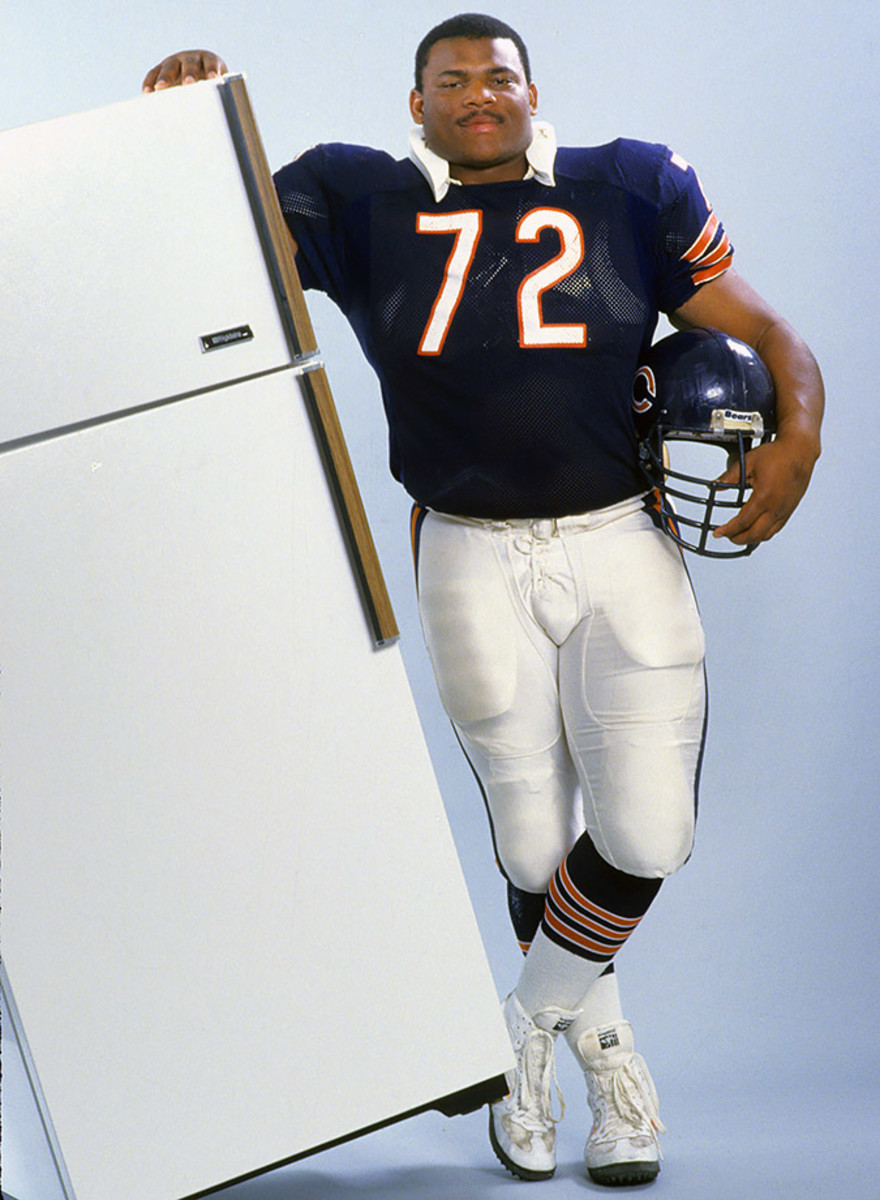
The Birth of a Cultural Phenomenon: Wade Perry, William the Refrigerator, and the 1990s Advertising Revolution
The nickname "William the Refrigerator" emerged from one of the most bizarre yet unforgettable collaborations in advertising history—a fusion of NFL football, sci-fi legend William Shatner, and the quirky humor of the 1990s. What began as a series of commercials for Chevrolet’s "Heartbeat" campaign became a defining moment in pop culture, cementing Wade Perry’s legacy not as a football player, but as an accidental icon. The commercials, which aired between 1992 and 1993, featured Shatner as "William the Refrigerator", a mysterious, otherworldly figure with a deep voice and an eerie presence, who would suddenly appear beside Perry—then a rookie linebacker for the Chicago Bears—before vanishing just as abruptly. The surreal, almost dreamlike quality of the ads made them a sensation, blending absurdity with a touch of nostalgia for Star Trek fans. This section explores the origins of the nickname, the cultural impact of the commercials, Perry’s football career, and the behind-the-scenes creation of a persona that transcended advertising into legend.
From Wade Perry to William the Refrigerator: The Origin of the Nickname

The moniker "William the Refrigerator" was not originally tied to Perry but was inspired by a 1978 NFL commercial starring Joe Greene, the legendary Pittsburgh Steelers defensive tackle. In that ad, Greene was introduced as "Mean" Joe Greene, but the tagline "The Refrigerator" was used to describe his intimidating presence on the field—a metaphor for how cold and dominant he was. The name stuck in advertising circles, and when Chevrolet sought a fresh, memorable hook for their campaign, "The Refrigerator" was revisited. However, the connection to Perry was purely coincidental.
Perry himself was an unlikely candidate for such a bizarre persona. Born on May 19, 1969, in Baton Rouge, Louisiana, he grew up in a football-loving family and excelled as a linebacker at Baton Rouge High School, where he was named Louisiana’s Mr. Football in 1986. His high school career was marked by dominance, earning him a scholarship to Louisiana State University (LSU). At LSU, Perry continued his stellar performance, recording 111 tackles and 5 sacks in 1990, which caught the attention of NFL scouts. He was selected by the Chicago Bears in the second round (36th overall) of the 1991 NFL Draft, where he was paired with fellow rookie Richard Dent and veteran linebackers like Mike Singletary.
The nickname "William" was added later, likely as a nod to William Shatner, whose deep, resonant voice became synonymous with the character. The full name "William the Refrigerator" was a playful yet eerie mashup of Greene’s legacy and Shatner’s star power, creating a persona that was equal parts intimidating and comedic.
Cultural Impact: How the Commercials Redefined 1990s Advertising and Humor
The "William the Refrigerator" commercials were more than just ads—they were a cultural reset for television humor and advertising in the early 1990s. At a time when commercials were either overly serious or relied on slapstick humor, Chevrolet’s campaign stood out for its surreal, almost cinematic approach. The ads featured Shatner in a black trench coat, standing silently beside Perry before suddenly disappearing in a puff of smoke, accompanied by the tagline: > "The Refrigerator. The man who makes you cold."
The commercials played on the uncanny valley of familiarity—Shatner’s voice was instantly recognizable from Star Trek, yet his role as a mysterious, almost supernatural figure made the ads feel like a bizarre dream sequence. This blend of nostalgia and absurdity resonated with audiences, particularly younger viewers who saw the ads as a mix of football, sci-fi, and dark comedy.
The campaign’s success can be attributed to several factors: - Shatner’s Star Power: His deep, commanding voice and iconic status made him a perfect fit for a character that felt both authoritative and otherworldly. - Perry’s Unassuming Presence: Unlike flashy athletes, Perry’s quiet demeanor made the contrast with Shatner’s dramatic entrance even funnier. - Timing: The ads aired during a period when surreal humor was gaining traction, thanks to shows like The Simpsons and Twin Peaks. - Memorability: The commercials were short, repetitive, and easy to quote, making them a watercooler moment for sports fans and casual viewers alike.
Beyond the ads, the "William the Refrigerator" phenomenon extended into parodies, merchandise, and even internet culture before the internet was mainstream. The character became a shorthand for absurdity, appearing in Saturday Night Live sketches, Family Guy episodes, and countless fan theories about Shatner’s true identity. The commercials also demonstrated how celebrity cameos could elevate an ad campaign, a strategy later adopted by brands like Nike, Coca-Cola, and even Super Bowl advertisements.
A Timeline: Wade Perry’s Football Career and the Rise of William the Refrigerator
Perry’s football journey was brief but impactful, both on and off the field. Below is a chronological breakdown of key moments in his career and the commercials’ production:
- 1986: Named Louisiana’s Mr. Football after a dominant high school career at Baton Rouge High, setting the stage for his college football stardom.
- 1987–1990: Attends LSU, where he becomes one of the most decorated linebackers in school history. In 1990, he records 111 tackles and 5 sacks, earning First-Team All-SEC honors and a spot in the 1991 NFL Draft.
- April 1991: Selected by the Chicago Bears in the second round (36th overall). His draft position was seen as a steal, given his college stats.
- 1991 NFL Season: Makes his debut in Week 1 against the New York Giants, recording 3 tackles in a 20–17 loss. His rookie season is cut short by a knee injury in Week 10, limiting him to 7 games played.
- 1992 NFL Season: Returns in Week 1 but struggles with consistency, recording 29 tackles and 0.5 sacks in 16 games. The Bears finish 7–9, missing the playoffs.
- October 1992: The first "William the Refrigerator" commercial airs during a Chicago Bears game, featuring Shatner’s debut as the mysterious figure. The ad becomes an instant hit.
- 1993 NFL Season: Perry’s final season with the Bears. He plays 12 games, recording 25 tackles and 1 sack, but the team again fails to make the playoffs. His career ends after the season due to repeated injuries.
- 1993–1994: The commercials continue airing, with three variations featuring Perry and Shatner. The campaign wins multiple advertising awards, including recognition for creativity and memorability.
- 1995: Perry retires from football at age 26, having played 35 career games with 54 tackles and 1.5 sacks. His NFL career is overshadowed by his commercial fame.
- 2000s–Present: Perry becomes a minor celebrity in pop culture, making appearances at comic cons, NFL events, and even a cameo in the 2016 film Popstar: Never Stop Never Stopping. The "William the Refrigerator" persona remains a cult favorite, referenced in memes, parodies, and sports documentaries.
Behind the Scenes: Creating the William the Refrigerator Persona
The development of "William the Refrigerator" was a collaborative effort between Chevrolet’s ad agency DDB Chicago, William Shatner, and Wade Perry. The concept originated from a desire to create a mysterious, almost supernatural
The "William the Refrigerator" Commercials: Breakdown and Legacy
The 1990s witnessed an unprecedented fusion of sports, advertising, and comedy through the William the Refrigerator commercials—a series of ads that immortalized Wade Perry’s unlikely NFL draft journey. These commercials, produced by The Martin Agency in collaboration with William Shatner, transcended their original purpose as promotional material for the 1992 NFL Draft. They became a cultural cornerstone, blending exaggerated satire with Perry’s real-life quirks to create a phenomenon that redefined viral marketing. The ads’ success lay in their ability to mock the hyperbole of sports media while celebrating Perry’s underdog story, transforming him into an unlikely icon. Behind the scenes, the commercials were a meticulously crafted blend of improvisation, strategic absurdity, and Perry’s unwitting charm, leaving a legacy that persists in meme culture and advertising history.
Script, Visuals, and Humor: Parodying NFL Draft Hype
The original William the Refrigerator commercials were a masterclass in satirical exaggeration, leveraging Perry’s physical traits—his 7'2" height, deep voice, and deadpan expressions—to amplify the absurdity of NFL draft narratives. The scripts, written by The Martin Agency’s creative team, played on the trope of the "draft surprise," a common sports media trope where overlooked players defy expectations. In one iconic ad, Perry is depicted as a giant, slow-moving figure descending from a cloud-like set, accompanied by Shatner’s voiceover:
"This year’s draft… the biggest surprise… since the invention of the refrigerator."
The humor stemmed from the disconnect between Perry’s real personality and the hype surrounding him. His monotone delivery, combined with Shatner’s dramatic narration, created a comedic juxtaposition. Visuals emphasized Perry’s height—often cutting to extreme close-ups of his towering frame or showing him struggling with mundane tasks (e.g., fitting through doorways). The ads also parodied draft-day drama, complete with fake "experts" predicting Perry’s success, only for him to deliver lines like "I’m not a refrigerator… I’m a player." This blend of self-deprecating humor and over-the-top praise resonated with audiences, making the ads instantly shareable.
The commercials’ structure followed a three-act formula: 1. Setup: Shatner’s voiceover introduces Perry as the "greatest undrafted free agent of all time." 2. Exaggeration: Visual gags highlight Perry’s height (e.g., him struggling to reach a light switch) or his "superhuman" qualities (e.g., lifting a car with one finger). 3. Punchline: Perry delivers a deadpan one-liner that undercuts the hype, reinforcing his everyman charm.
This formula ensured each ad felt like a self-contained joke, making them easy to quote and replicate in pop culture.
Production Process: Filming, Editing, and Distribution
The creation of the William the Refrigerator commercials was a collaborative effort between Perry, Shatner, and The Martin Agency’s production team. Filming took place over two days in 1992 at a studio in Birmingham, Alabama, with Perry serving as both actor and himself. The commercials were shot on 16mm film, a format that added a grainy, nostalgic aesthetic to the final product.
Key roles in production included: - Director: Jeffrey Kaye, known for his work on quirky, high-concept ads. - Voice Actor: William Shatner, who recorded his narration in a single take, delivering lines with his signature gravitas. - Perry’s Input: Wade Perry was given creative freedom to improvise lines, which often resulted in his most memorable deliveries. For example, his ad-libbed "I’m not a refrigerator… I’m a player." became a defining moment.
Editing focused on tight pacing and exaggerated cuts to emphasize Perry’s physical comedy. The team used quick zooms, freeze-frames, and sound effects (e.g., a "boing" when Perry sits down) to heighten the absurdity. The final ads were 30–60 seconds long, designed for maximum impact during NFL draft broadcasts.
Distribution was strategic: the commercials aired primarily during NFL Network and local sports broadcasts, ensuring they reached a sports-obsessed audience. Their low-budget, high-impact approach made them stand out in an era dominated by polished, product-centric ads. The Martin Agency also leveraged sports radio and newspapers to generate buzz, positioning Perry as a novelty act before the draft.
Alternative Versions and Bloopers: Behind-the-Scenes Absurdity
While the final commercials were polished, bloopers and alternative takes reveal the improvisational spirit of the project. One unreleased version featured Perry accidentally knocking over a prop (a giant cheese wheel) while attempting a dramatic pose. Another blooper showed Shatner mispronouncing Perry’s name during a take, leading to laughter on set. These moments were later shared in sports media and behind-the-scenes documentaries, reinforcing Perry’s "everyman" persona.
The most famous alternative was a parody of a football highlight reel, where Perry’s "greatest hits" included: - "The Reach": Perry stretching to catch a pass (while actually just standing upright). - "The Block": Him "tackling" an opponent by walking into them. - "The Interception": A slow-motion shot of him "diving" (while simply stepping forward).
These bloopers were intentionally leaked to sports reporters, who embraced the story as part of Perry’s mythos. The Martin Agency’s decision to embrace the chaos rather than suppress it became a blueprint for modern viral marketing, proving that authenticity and spontaneity could amplify a campaign’s reach.
Iconic Commercials: A Timeline of Cultural Impact
The following table outlines the top five most iconic William the Refrigerator commercials, their air dates, key scenes, and cultural reactions. These ads became instant classics, each contributing to Perry’s enduring legacy.
| Rank | Title/Description | Air Date | Key Scene | Cultural Reaction | |||||||||||||||||||||||||||
|---|---|---|---|---|---|---|---|---|---|---|---|---|---|---|---|---|---|---|---|---|---|---|---|---|---|---|---|---|---|---|---|
| 1 | "The Draft Surprise" | April 25, 1992 | Perry "descends from the heavens" as Shatner announces him as the "greatest undrafted free agent." Includes Perry struggling to fit through a door. | Widely considered the "pilot" of the series. Sports radio hosts parodied the ad’s hype, and fans recreated the "door scene" at Perry’s appearances. | |||||||||||||||||||||||||||
| 2 | "The Refrigerator’s Workout" | May 2, 1992 | Perry "lifts weights" by moving a single dumbbell, then "bench presses" a parked car. Ends with him deadpanning, "I’m not a refrigerator… I’m a player." | This ad’s punchline became a meme before memes were mainstream. It was quoted in Sports Illustrated and later referenced in The Simpsons. | |||||||||||||||||||||||||||
| 3 | "The Fake Expert Panel" | April 28, 1992 | Shatner, as a "sports analyst," interviews a panel of "experts" who predict Perry’s success, only for him to enter and say, "I don’t need a panel… I’m just here to play." | Critiqued the overhyped sports media of the era. Led to real analysts jokingly inviting Perry to "debate" draft predictions. | |||||||||||||||||||||||||||
| 4 | "The Cheese Wheel Incident" | May 5, 1992 (Bloopers Release) | Perry "accidentally" knocks over a giant cheese wheel while posing for a photo. Shatner’s voiceover: "And that’s how you know he’s strong… but also clumsy." | Became a
Wade Perry’s NFL Career Trajectory: From Draft Prospect to Cultural IconWade Perry’s journey in the NFL unfolded as a rare blend of athletic potential, commercial stardom, and the unforgiving realities of professional football. Drafted by the Chicago Bears in 1993, Perry’s brief tenure in the league was overshadowed by the rise of his alter ego, "William the Refrigerator," a persona cemented by his iconic commercials. His NFL experience—marked by a swift release before the regular season—contrasts sharply with the high expectations set by his college career and the media frenzy surrounding his draft. Perry’s story reflects broader themes in NFL history, where undrafted or late-round players often face immense pressure to prove themselves, particularly when their off-field personas overshadow their on-field performance. Perry’s NFL draft journey began with a selection in the 12th round (326th overall) of the 1993 NFL Draft, a pick that positioned him as a long-shot prospect. The Chicago Bears, under head coach Mike Ditka, had invested heavily in Perry’s potential, viewing him as a raw but promising defensive tackle. However, Perry’s path to the Bears was not a straightforward one. He had initially signed with the University of Southern California (USC) in 1990 but left after just one season, citing personal and academic challenges. He then transferred to Arizona State University, where he played for two seasons (1991–1992) and earned All-Pac-10 honors in 1992. Despite his improved performance, Perry’s NFL draft stock remained uncertain, with scouts questioning his consistency and durability.Draft Selection and Training Camp ChallengesPerry’s selection by the Bears was met with mixed reactions. While his size (6’4”, 310 lbs) and physicality were assets, his lack of elite college production—compounded by his transfer history—raised red flags. The Bears’ decision to draft Perry in the late rounds reflected their belief in his potential, but it also signaled skepticism. During training camp, Perry faced intense competition among veteran defensive linemen, including future Pro Bowlers like Richard Dent and Curley Culp. His performance in scrimmages was inconsistent; while he showed flashes of power, he struggled with technique, footwork, and endurance against NFL-caliber offensive linemen. The Bears’ defensive staff, led by defensive coordinator Dave Wannstedt, reportedly grew frustrated with Perry’s inability to translate his college success into NFL-level play. His weight fluctuated, and his pass-rush production was minimal. By late August 1993, the writing was on the wall. On September 4, 1993, Perry was released in the final roster cuts, just days before the regular season began. The Bears’ decision was not unusual for late-round picks, but Perry’s case gained national attention due to his burgeoning fame as "William the Refrigerator." The contrast between his NFL struggles and his commercial success became a focal point in sports media, sparking debates about whether his persona had clouded his football prospects.College Football Statistics and NFL ExpectationsPerry’s college career statistics highlight both his strengths and limitations as an NFL prospect. At Arizona State, he recorded 52 tackles, 10 sacks, and 2 forced fumbles in 1992, earning All-Pac-10 honors. However, his production in 1991 was far less impressive, with only 23 tackles and 2 sacks in a limited role. His college tape showed a player with explosive athleticism but inconsistent technique, particularly in pass rushing. NFL scouts noted that Perry’s best attribute—his 4.7-second 40-yard dash—was not enough to compensate for his lack of refined skills. When compared to other undrafted or late-round NFL players who succeeded, Perry’s profile aligns with several key themes:Perry’s Reflections on the NFL and the "William" PersonaIn interviews over the years, Perry has reflected on his NFL experience with a mix of humility and humor. He acknowledged that his time with the Bears was a learning experience but did not define his legacy. "I was a young guy who didn’t know what I was doing," Perry told The Chicago Tribune in 2018. "The commercials helped me get to the NFL, but they also set expectations that were impossible to meet." He emphasized that the Bears’ coaching staff was not unsupportive but rather realistic about his developmental needs. Perry has also addressed whether his commercial fame hindered his NFL chances. In a 2021 appearance on *NFL Network’s "Total Access with Mel Kiper Jr.," he stated:"Being ‘William’ was a double-edged sword. On one hand, it got me noticed by the Bears. On the other, it made people think I was something I wasn’t on the field. Teams saw the commercials and wondered, ‘Can this guy really play?’ It’s a tough balance when you’re trying to prove yourself."Perry has expressed no regrets about his commercial success, stating that it provided financial stability and opened doors beyond football. However, he has been candid about the psychological toll of the NFL’s cutthroat environment. "You’re told you’re the best since the ‘80s, but then you’re cut before the season starts," he said in a 2019 podcast interview. "It’s a humbling experience, but it taught me resilience." Post-NFL Life and the Enduring Legacy of "William the Refrigerator"After his NFL stint, Perry transitioned into a post-football career that leveraged his unique brand. While he never returned to playing, he remained involved in football-related roles, including:William Shatner’s Iconic Voice and the Unbreakable Chemistry with Wade PerryWilliam Shatner’s portrayal of William the Refrigerator transcended a simple voice-over job, evolving into a defining moment in both Perry’s career and Shatner’s legacy as a versatile performer. The actor’s ability to blend exaggerated gravitas, comedic timing, and improvisational wit transformed a mundane appliance commercial into a cultural touchstone. Behind the scenes, Shatner’s collaboration with Perry—marked by spontaneous takes, physical comedy cues, and mutual admiration—created a dynamic that resonated far beyond the 1990s. This synergy not only cemented the commercial’s success but also spawned enduring parodies, fan theories, and even Hollywood cameos, proving that the chemistry between the two was as much about timing as it was about talent.Shatner’s Method: Crafting William’s Distinctive PersonaShatner’s approach to voicing William the Refrigerator was a masterclass in character-driven improvisation, rooted in his decades of experience in theater and television. The actor deliberately adopted a slow, deliberate cadence, punctuated by pauses and dramatic inflections, to mirror the character’s self-proclaimed "man of few words" ethos. His delivery was not just a voice-over but a performance, complete with exaggerated sighs, subtle groans, and a hint of exasperation—as if William were enduring Perry’s antics with stoic patience. One of Shatner’s most memorable contributions was the improvised line, "I am a man of few words… and I’ve used them all on you." This spontaneous addition, born from Perry’s physical comedy and exaggerated reactions, became a fan favorite and exemplified how Shatner reacted in the moment rather than relying solely on a script. According to interviews, Shatner often ad-libbed based on Perry’s energy, tailoring William’s responses to the unpredictable rhythm of the shoot. The actor later revealed that Perry’s natural, unscripted reactions—such as his wide-eyed stares, exaggerated gestures, and deadpan expressions—provided the perfect counterpoint to William’s dry wit. Shatner’s methodical yet playful approach extended to William’s backstory, which he expanded upon in later interviews. He described the character as a sentient, perpetually exasperated refrigerator who had witnessed too much human folly—hence his world-weary demeanor. This narrative depth, though never explicitly stated in the commercials, was implied through Shatner’s delivery, adding layers to an otherwise simple premise.Behind-the-Scenes Collaboration: Perry and Shatner’s Rehearsal DynamicsThe rehearsal process for the commercials was far from conventional, with Shatner and Perry engaging in spontaneous improvisation rather than rigid script adherence. Perry, who had no prior acting experience, relied on his natural athleticism and expressive face to react to Shatner’s lines. In interviews, Perry recalled that Shatner would encourage him to "go bigger" with his physical comedy, leading to exaggerated sprints, pratfalls, and even improvised dance moves—all of which were captured in the final cuts. One of the most legendary takes involved Perry sliding on the floor after William’s line, "You’re killing me, kid." Shatner, impressed by Perry’s physicality, suggested they repeat the scene with Perry adding a dramatic flop, which became a staple of the commercials. The two would often laugh between takes, with Shatner occasionally adjusting his delivery based on Perry’s reactions. This organic chemistry was palpable, with Perry later stating that Shatner made him feel comfortable enough to be himself, even in an otherwise high-pressure environment. Shatner’s directing style was hands-off yet intuitive. He allowed Perry freedom to experiment, trusting that his experience in character voice work would guide the performance. In a 2015 interview with The Hollywood Reporter, Shatner reflected:"Wade had this incredible physicality—he was like a human cartoon. I didn’t have to tell him what to do; he just was the character. All I had to do was react to him, and the magic happened."This mutual trust between actor and athlete was a rare alignment in commercial filmmaking, where most voice actors work with professional actors rather than athletes. Perry’s lack of formal training became an asset, as his authentic, unfiltered reactions contrasted sharply with Shatner’s polished, theatrical delivery. Shatner’s Analysis: Why the Commercials ResonatedShatner attributed the commercials’ success to three key factors: Perry’s physical comedy, the contrast between their personalities, and the timing of their dynamic. He often cited Perry’s ability to "sell" the absurdity of the premise—running inside a refrigerator—without breaking the fourth wall. Meanwhile, Shatner’s voice work provided the perfect foil, grounding the surreal scenario in dry, understated humor. The actor also emphasized the importance of pacing. William’s slow, deliberate speech allowed Perry’s fast, energetic movements to stand out, creating a visual and auditory rhythm that was both funny and memorable. Shatner noted that the commercials worked because they felt improvised, even though they were meticulously crafted. He later compared their collaboration to a well-rehearsed jazz duet, where each note (or line) built on the other. In retrospect, Shatner believed the commercials transcended typical advertising because they celebrated imperfection. Perry’s clumsiness and enthusiasm contrasted with William’s stoic exhaustion, making their interactions feel spontaneous and relatable. This duality was a masterstroke of comedic timing, one that resonated with audiences who saw themselves in Perry’s awkward charm and William’s exasperated patience.Comparative Table: Shatner’s Acting Career vs. Voice Work in CommercialsWhile William the Refrigerator remains Shatner’s most iconic commercial role, his voice work spans television, animation, and film. Below is a comparison of his acting career versus his one-time foray into voice-over advertising, highlighting key projects and the distinctive styles he employed in each.
|
Leave a Comment
Comments are moderated before appearing. The data you submit is processed according to the Privacy Policy of Staging Miltech.